|
Table of Contents
Get my eBook & Win in Court!
Only $3.95
Money Back Guarantee!
Download The eBook Today
Preface - Home Page
Foreword - by Ken Carlson, tenant attorney
Introduction
PART I: Some basic guidelines
1. Break your lease
2. Get your security deposit returned
PART II: Prepare for small claims court
3. Learn your state’s landlord tenant law
4. Contact former and current tenants
5. Organize your evidence
6. Consult with an attorney
7. Write a rebuttal to landlord’s claims
8. Create a presentation folder
9. File a lawsuit; or defend against one
10. Testify, and win, in small claims court
11. Collect the judgment
PART III: Winning presentation folder
12. Follow our lead (eBook)
13. Front cover (eBook)
14. Small claims lawsuits (eBook)
15. Plaintiff’s clams (eBook)
16. Defendant’s rebuttal (eBook)
17. Move-in, move-out timeline (eBook)
18. Landlord tenant law violations (eBook)
19. Photographic evidence (eBook)
20. Exhibits (eBook)
21. Conclusion (eBook)
22. Court ordered judgment (eBook)
Conclusion
Contact
Buy eBook
Links
|
|
|
5. Organize your evidence
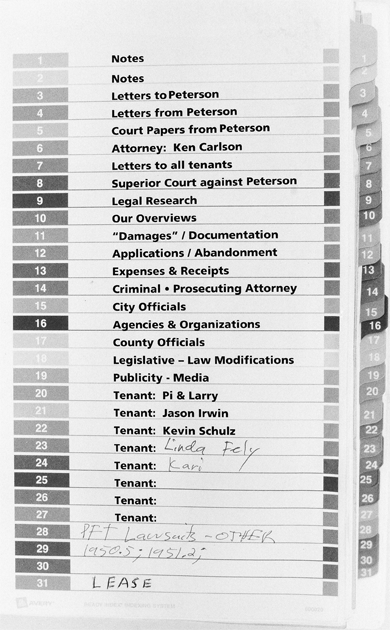
I created two binders of information for use in our case. The first binder I suggest you create is one that contains all of your “originals” – pictured below. Buy a 3-hole punch, a 3-ring binder, and some dividers, and start organizing all of your information. This first binder isn’t for the judge, but for you. Here are some items you may wind up filing into this first binder:
• Letters you wrote to your landlord
• Letters your landlord wrote to you
• Expenses related to preparing for court
• Letters you wrote to current and former tenants
• Letters from former tenants
• Your state’s landlord tenant law
• Emails from prospective applicants
• Applications from prospective tenants
|
|
|
• Statements from witnesses
• Your lease agreement
• Court papers
• Attorney information
• Cleaning receipts
• Legal research
• Notes
|
|
|
Dear Larry: Just wanted to say thanks. Your website/book helped us win in court. I spent several hours preparing our binder and felt very organized going into court. Looking around we saw everyone else come in with loose papers just like you had said. We felt very prepared, but unfortunately the judge hardly looked at our binder. He just looked at what the landlord lacked as proof and awarded us judgement. Although the binder wasn't the deciding factor, it sure did help us have the confidence to stand up to our landlord in court. ~ Sincerely, Tonia Baily
Larry helped me get my deposit back from my slumlord. I highly recommend his presentation folder and expertize. I would not have received a dime without his help! Heather Hoffman Kimel
|
The second binder is the presentation folder. This is the binder that you’ll create for the judge, and/or your attorney and your records. You will photocopy the documents out of the first binder for your presentation folder, so that you always have the originals. If you don’t have enough time to gather your evidence before the court date, file for an extension, which is what we did.
|
|